Artist Materials Spotlight: Cardboard – From Playful Experiments to Global Art
The Humble Hero of Design
Cardboard is often regarded as disposable, a material designed to protect goods in transit before being discarded. Yet, in the hands of visionary artists and designers, it becomes a medium of strength, beauty, and storytelling. Its inexpensive nature makes it accessible to artists and designers, offering a cost-effective way to explore creative ideas. For Lazerian, cardboard has been a recurring force in its practice, shaping everything from furniture and sculptural pods—where structure is essential for stability and form—to public art and automotive icons. Globally too, cardboard has emerged as a surprising champion of sustainable and conceptual design.

A Brief History and Evolution of Cardboard
Cardboard’s journey from a simple packaging material to a celebrated medium in sustainable art is a testament to creativity and innovation. While the term “cardboard” first appeared in the art world as early as 1848, it wasn’t until the 20th century that artists began to truly explore its potential. As interest in environmental issues and sustainable practices grew, so did the appeal of recycled cardboard as an artistic material. Artists around the world started creating intricate sculptures, installations, and even paintings from discarded boxes and packaging, transforming what was once considered trash into thought-provoking works of contemporary art.
This evolution reflects a broader shift in the art world toward using everyday materials to raise awareness about waste and sustainability. Cardboard art has become a powerful tool for artists to comment on environmental issues, encouraging viewers to reconsider the value of materials often overlooked in daily life. Today, recycled cardboard is at the heart of many innovative projects, inspiring a new generation of artists to create with purpose and contribute to the ongoing dialogue about sustainability in art and culture. The history of cardboard art is not just about the material itself, but about the growing interest in making art that matters—art that both reflects and shapes our relationship with the environment.
Cardboard in Lazerian’s Practice-sustainable art
Pupa – Waste Not Want It
Among Lazerian’s most ambitious cardboard projects is Pupa, a cavern-like pod designed as part of Bloomberg’s “Waste Not Want It” initiative. Constructed from reclaimed cardboard and pallets, Pupa functioned as an immersive installation, offering employees and visitors a sanctuary space within Bloomberg’s London offices.
Taking inspiration from natural habitats—cocoons, beehives, spider nests, and bird nests—the design mimicked shelter while also recalling the vaulted ceilings of cathedrals. Advanced computer modelling translated reclaimed materials into triangular components, which were painstakingly assembled by hand. Pupa became a cocoon within a building, providing not only a retreat but also a powerful demonstration of cardboard’s structural and acoustic capabilities.
Honeycomb Cardboard Furniture
The Honeycomb Collection, including the Radiolaria Sofa and Bravais Armchair, showcased how cardboard could be elegant, durable, and sculptural. Created in collaboration with paper artist Richard Sweeney, the series used triangular column structures to achieve both strength and visual rhythm. Locally sourced corrugated cardboard provided the foundation, proving that recycled materials could be transformed into high-quality, long-lasting pieces. The honeycomb structure and the manipulation of cardboard’s surface introduced a unique texture, enhancing both the tactile and visual qualities of the furniture. The Honeycomb Collection marked a turning point in how furniture design could embody both sustainability and artistry.
Chromatogram – Art in Manufacturing
Commissioned for the National Festival of Making, Lazerian’s Chromatogram project transformed the semi-derelict 1860s Cotton Exchange in Blackburn into a colourful cardboard wonderland. Fifteen walk-in pods, each 10ft tall, were fabricated entirely from precision-cut printed cardboard. The display of these pods was carefully arranged to facilitate public viewing and interaction, allowing visitors to experience the artwork up close and appreciate the details from multiple perspectives.
Created during a residency at The Cardboard Box Company, the work celebrated the histories of manufacturing and design, while challenging audiences’ perceptions of cardboard. By avoiding right angles and embracing organic, irregular forms, Chromatogram redefined the material’s possibilities. The gradient colours printed onto each module referenced the Cardboard Box Company’s fifty-year history of inks, turning industrial legacy into art.
Skoda Cardboard Car
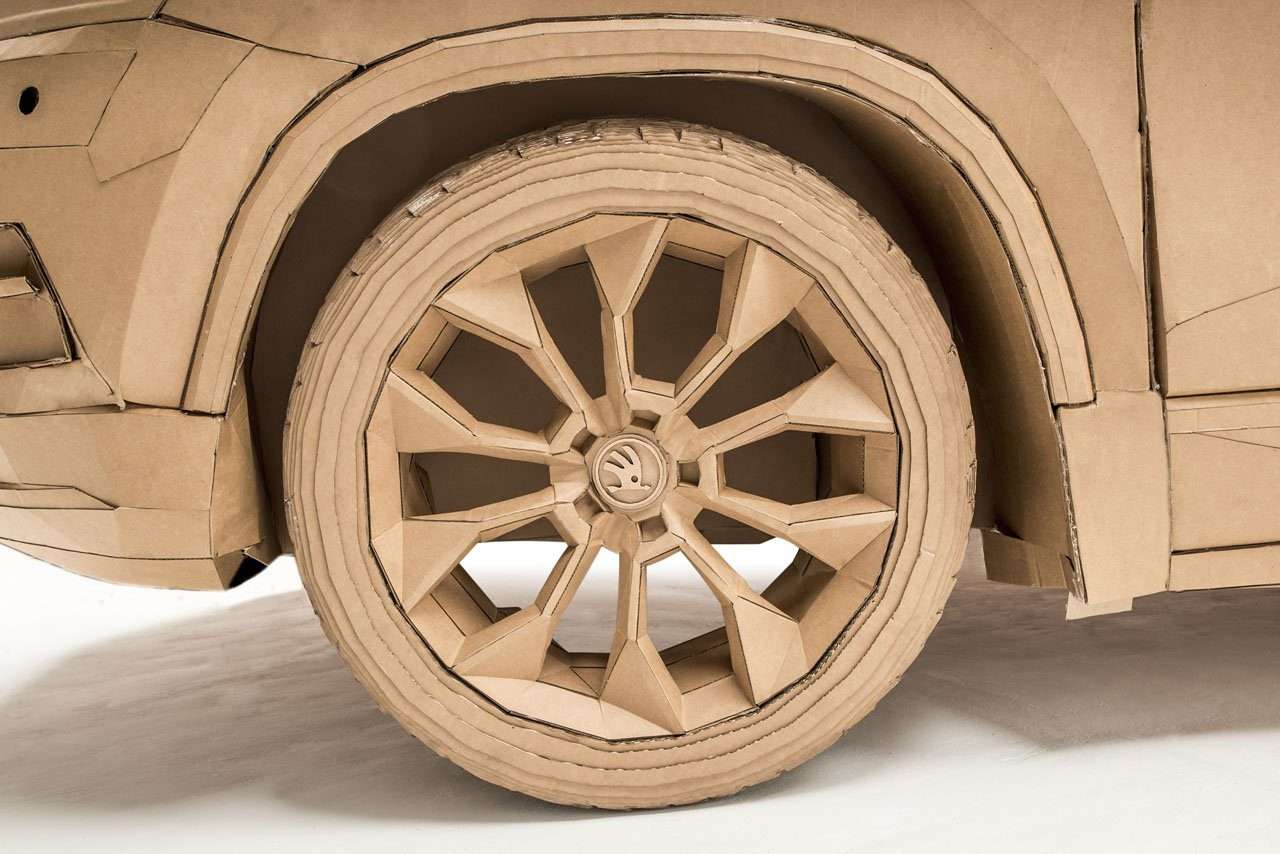
In collaboration with Škoda, Lazerian built a full-scale replica of the Karoq SUV from cardboard. Nicknamed the Kid Karoqthe project positioned the car as the “ultimate child-friendly vehicle.” More than 600 hours of meticulous craftsmanship went into replicating every curve and panel of the real vehicle, purely by eye. The project creates a unique intersection of art, design, and sustainability, transforming cardboard into a striking and meaningful sculpture. The result was both playful and technically dazzling, demonstrating cardboard’s ability to captivate at scale while highlighting sustainability in a globally recognisable form.
Curiosity Killed the Cat- cardboard sculptures
For Manchester’s 50 Windows of Creativity art trail, Lazerian created a series of large-scale cardboard sculptures, including oversized binoculars and giant hands. These works were not only visually striking but also conceptually resonant, reflecting on themes of lockdown, distance, and fragility.
The binoculars, crafted from a combination of laser-cut and hand-assembled cardboard, contained lenses that played videos from inside the Lazerian studio, giving audiences a socially distanced glimpse behind the scenes. It was cardboard as commentary—fragile yet resilient, playful yet reflective of contemporary life.
Techniques and Tools: Shaping Cardboard’s Potential
Creating cardboard art is a process that blends traditional craftsmanship with inventive techniques, allowing artists to unlock the full potential of this versatile material. At its core, cardboard art relies on simple yet essential tools: scissors for precise cutting, glue for strong bonds, and sometimes even carving tools to shape intricate patterns and textures. Artists often experiment with different types of cardboard, such as corrugated or layered varieties, to achieve unique effects and desired shapes in their sculptures and installations.
The process of working with cardboard is as creative as it is practical. Techniques like cutting, gluing, folding, and layering enable artists to build complex structures and forms, from delicate patterns to robust sculptures. Many artists also incorporate painting and drawing, adding color and detail to their creations. By combining these methods, they can transform recycled cardboard into stunning works of art that rival those made from more traditional materials.
What sets cardboard art apart is its accessibility and eco-friendly nature. Using recycled cardboard not only reduces waste but also challenges artists to think creatively about materials and processes. Whether crafting large-scale installations or intricate models, artists demonstrate that with the right techniques and tools, cardboard can be shaped into almost any form imaginable—proving that sustainable art can be both beautiful and impactful.


Cardboard on the Global Stage-contemporary art
Lazerian’s cardboard explorations sit within a vibrant global context, reflecting the dynamic possibilities within the arts, including visual arts, sculpture, and installation. Around the world, artists and designers have elevated cardboard into a material of choice:
- Bodys Isek Kinggelez crafted utopian cardboard cityscapes that reimagined architecture as dreamlike and democratic.
- Chris Gilmour sculpted hyper-realistic life-size objects—from pianos to bicycles—entirely from cardboard.
- Isabel and Alfredo Aquilizan created monumental cardboard installations reflecting migration and belonging, often incorporating other materials to add depth and texture.
- Eva Jospin built immersive cardboard landscapes that blur architecture and nature.
- Monami ohno sculpted intricate pop culture figures from Amazon boxes, turning waste into playful nostalgia.
- Erwin Heerich used cardboard to explore pure form and space, stripped of aesthetic baggage.
- Laurence Vallières produced monumental animal sculptures at Burning Man, combining scale with ecological critique and sometimes integrating other materials for structural strength.
- Shigeru Ban designed humanitarian architecture with cardboard tubes, including the famous Christchurch Cardboard Cathedral.
- Kurt Schwitters incorporated debris, cardboard, and personal objects into his Merzbau installations, transforming everyday remnants into immersive environments.
These examples underscore cardboard’s universal resonance—an everyday material elevated into a global language of sustainability, imagination, and accessibility. Displaying these works in public spaces highlights the versatility and artistic value of cardboard art, inviting broader audiences to engage with creative expression.
Why Cardboard Inspires
Cardboard carries a paradox: it is fragile yet strong, temporary yet enduring, cheap yet invaluable when reimagined. As a green, eco-friendly material, its recyclability addresses urgent environmental needs, while its ubiquity makes it democratic. Cardboard enables artists to express and express themselves freely, offering a medium that is free of function and commercial constraints, allowing for uninhibited creativity. Engaging in cardboard art can also serve as a form of rest, providing a creative break that refreshes the mind and sparks new ideas. While cardboard art may not last forever, the impact and message it conveys can endure long after the material fades. For Lazerian and many others, cardboard is more than a medium—it is a statement.
Ordinary Material, Extraordinary Stories
Through projects like Pupa, the Honeycomb Collection, Chromatogram, the Škoda Cardboard Car, and Curiosity Killed the Cat, Lazerian has shown that cardboard is not a limitation but a liberation. From the very beginning of its use in art history, particularly with early 20th-century Cubist and Dadaist works, cardboard has challenged traditional boundaries. Artists often draw or sketch their ideas before transforming them into cardboard sculptures, using paint to finish and enhance the final artworks with vibrant color and texture. The importance of preserving cardboard art from environmental damage—such as moisture, sunlight, dust, and dirt—cannot be overstated, as it ensures the longevity and integrity of these unique pieces. Cardboard art can also address politics and economic issues, serving as a medium for commentary on societal and sustainability concerns. Some artworks reveal or hide aspects of everyday objects, uncovering what is usually overlooked or concealed. The ambiguity of the term ‘cardboard’ itself—encompassing various materials and styles—adds to its intrigue and contemporary relevance in the art world. Across the globe, artists continue to reaffirm this lesson: cardboard may be humble, but in the right hands, it tells extraordinary stories.
News
Berita
News Flash
Blog
Technology
Sports
Sport
Football
Tips
Finance
Berita Terkini
Berita Terbaru
Berita Kekinian
News
Berita Terkini
Olahraga
Pasang Internet Myrepublic
Jasa Import China
Jasa Import Door to Door

Related Posts

Iran’s Araghchi visits Doha to pay tribute to former emir, days after attack in Qatar

Man Utd make surprise £35m move for Aston Villa’s Tielemans