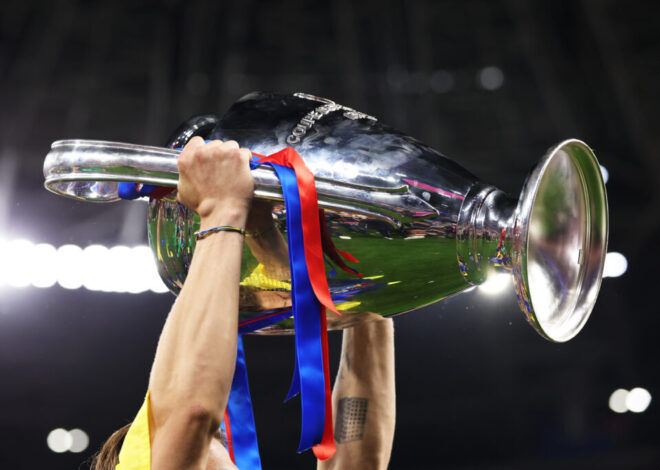
‘May Spain crush them like we crushed them in the Malvinas’
The English journalist Piers Morgan ignited the controversy this July 16 after calling Argentina’s players ‘classless idiots’ after England’s elimination at the hands of the albiceleste in the 2026 World Cup. The match was played on July 15 as part of the semifinals of the tournament.
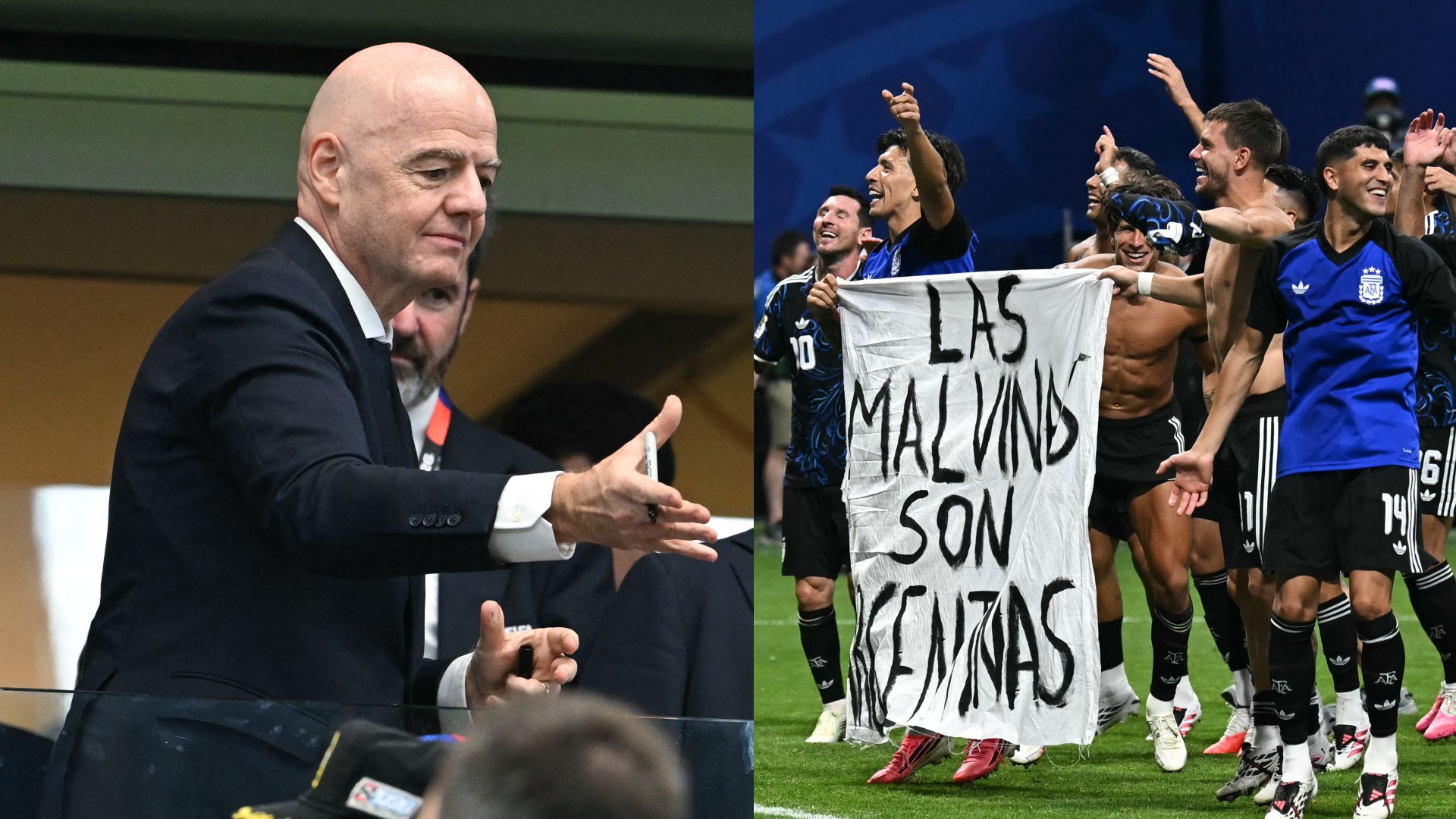
The communicator added: “I hope Spain crushes them as badly in the final as we crushed them in the Falklands War.” And after the victory, the team led by Lionel Messi celebrated on the grass of the Mercedes-Benz Stadium, in the United States, with a flag that carried the message: “The Malvinas are Argentine.”
Piers Morgan. Photo:Twitter.
Morgan is a controversial British journalist and television presenter, considered one of the most recognizable faces of the media in the United Kingdom. In 2021, he left the Good Morning Britain program after making controversial comments against Meghan Markle, Duchess of Sussex. Since then, he has moved his work to digital platforms.
The controversy unleashed by the Argentine players
The scene occurred once the match ended, in which the albiceleste got the pass to the final of the tournament after reversing the score in the last minutes of the match.
The banner was displayed by midfielder Giovanni Lo Celso while he shared the celebration with the rest of the Argentine team.. Defender Lisandro Martínez also appeared with him, while his teammates continued the celebrations in front of the fans who accompanied the team during the match.
READ ALSO
The gesture occurred after a match that, in addition to defining one of the World Cup finalists, was surrounded for the symbolism that historically accompanies the confrontations between Argentina and England.
Argentina vs. England. Photo:Official Instagram account of the national teams
The image in question was once again at the center of the debate the historic claim to sovereignty of the South American country on the archipelago located in the South Atlantic.
Midfielder Leandro Paredes said after the match: “I’m going to keep what I really think to myself” about what it means to beat England and noted: “But it is an incredible emotion because of everything it generates. We know that for our country it is something unique and I hope that people are very happy.”
READ ALSO
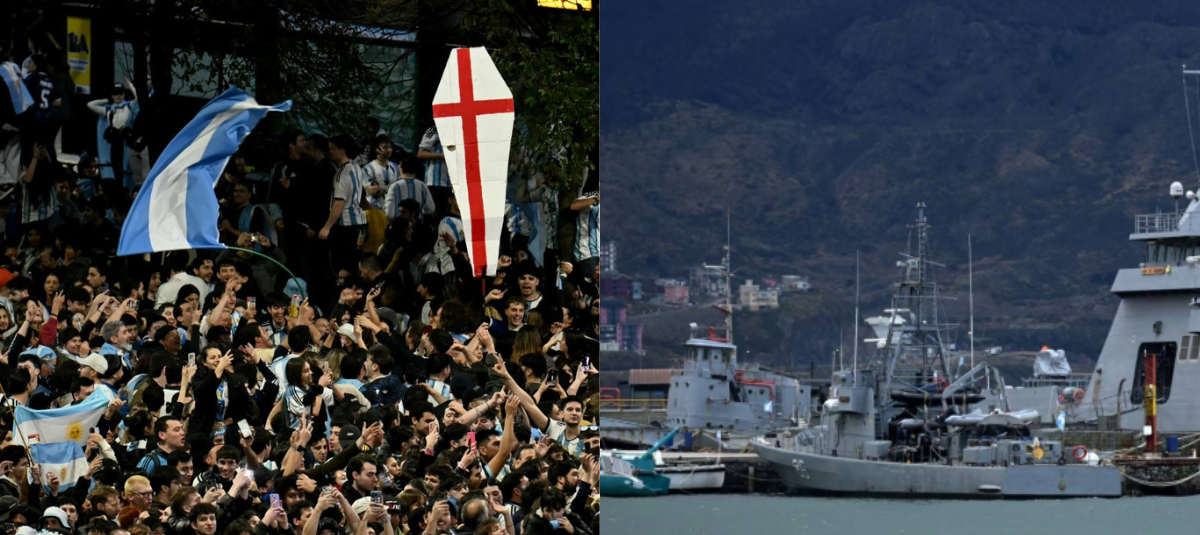
Striker Lautaro Martínez, scorer of the winning goal in stoppage time, also acknowledged that the match had a different connotation for the group. Although he recalled that the Falklands War “It’s something that happened many years ago,” He assured that the commitment “was not just another game” for the team led by Lionel Scaloni.
As he explained, “beyond everything, we try to put the anxiety, everything that was generated off the field, aside. But for us it was not a game like the others. “It was a special game.”
READ ALSO
The classification came after a comeback achieved in the final stretch of the match. England had gone ahead with a goal Anthony Gordon in the 55th minute, but Argentina reacted with scores from Enzo Fernández, in the 85th minute, and from Lautaro Martínez in added time.
Messi participated in both plays, who first assisted Fernández and later sent the cross that ended in the Argentine striker’s header to seal the final 2-1.
The Falklands War
Falkland Islands. Photo:Nasa.
This war conflict occurred between April and June 1982. The confrontation began when Argentine forces landed on the aforementioned islands and the United Kingdom responded by sending a military force to regain control of the territory.
After just over two months of fighting, Argentine troops surrendered on June 14. In the war, 649 Argentine soldiers, 255 British and three island civilians died.
The Argentine State maintains its claim to sovereignty and affirms that the recovery of these territories constitutes a permanent objective in accordance with international law.
Pedro A. Sánchez
Editorial Latest News
Can Spain stop Messi in the grand final? | THE TIME Photo:
PakarPBN
A Private Blog Network (PBN) is a collection of websites that are controlled by a single individual or organization and used primarily to build backlinks to a “money site” in order to influence its ranking in search engines such as Google. The core idea behind a PBN is based on the importance of backlinks in Google’s ranking algorithm. Since Google views backlinks as signals of authority and trust, some website owners attempt to artificially create these signals through a controlled network of sites.
In a typical PBN setup, the owner acquires expired or aged domains that already have existing authority, backlinks, and history. These domains are rebuilt with new content and hosted separately, often using different IP addresses, hosting providers, themes, and ownership details to make them appear unrelated. Within the content published on these sites, links are strategically placed that point to the main website the owner wants to rank higher. By doing this, the owner attempts to pass link equity (also known as “link juice”) from the PBN sites to the target website.
The purpose of a PBN is to give the impression that the target website is naturally earning links from multiple independent sources. If done effectively, this can temporarily improve keyword rankings, increase organic visibility, and drive more traffic from search results.