No right angles in nature and its affect on art and design
When you look closely at the natural world, one thing quickly becomes clear: perfect right angles are rare, almost nonexistent. Trees don’t branch at 90 degrees. Rivers don’t flow in straight lines. Mountain ranges, cloud formations, animal bodies — none are composed of neat, perpendicular intersections. Nature favors curves, spirals, fractals, and organic irregularities. And this absence of rigid right angles has profoundly influenced artists, designers, and architects for centuries.
Why Right Angles Are Unnatural
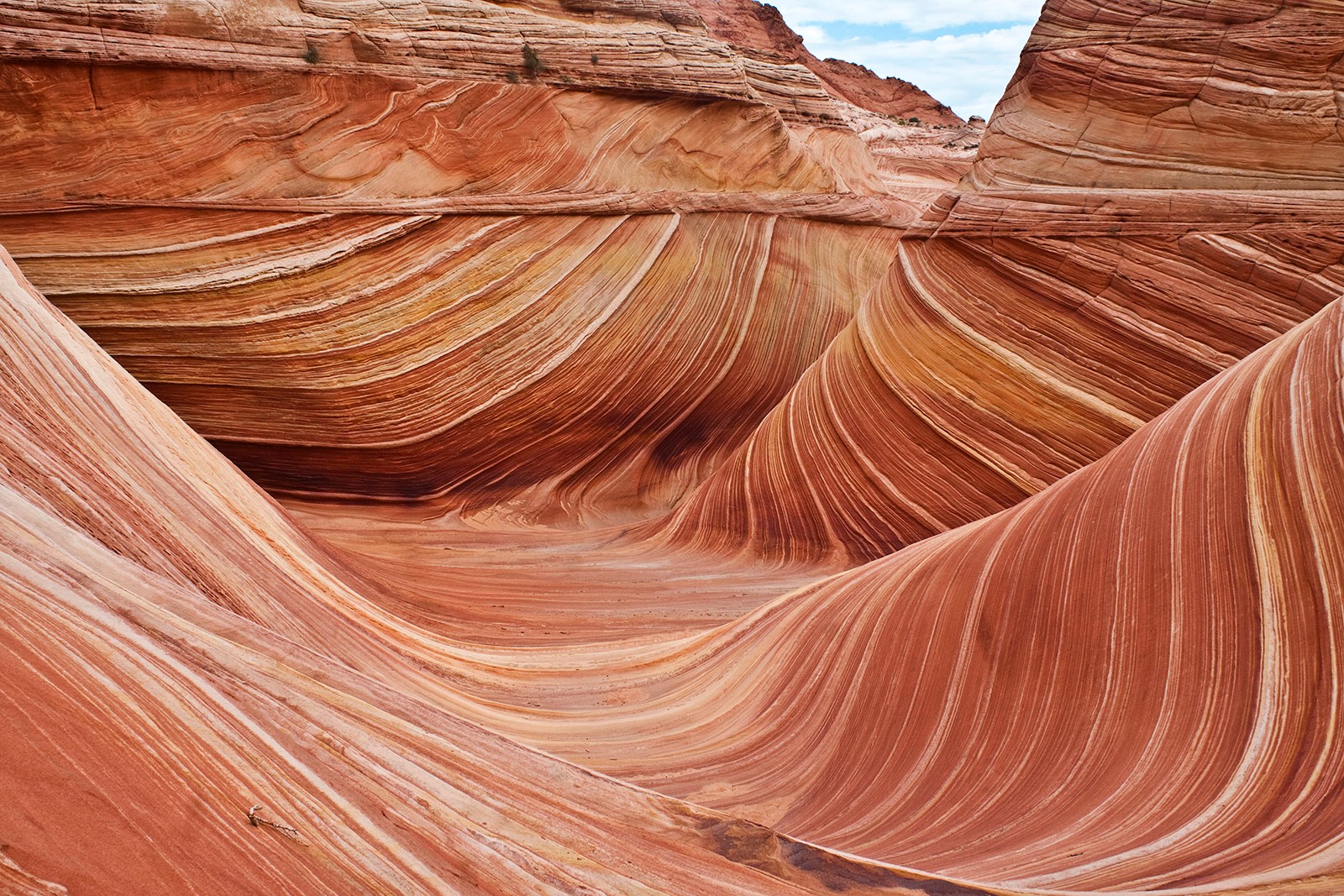
In physics and biology, structures grow and evolve based on efficiency, strength, and flow — not human ideas of neatness. A 90-degree angle creates points of weakness and resistance, while curved or branching structures distribute forces more evenly. The spirals of a nautilus shell, the branching of veins in a leaf, and the undulating dunes of a desert all demonstrate that natural efficiency lies in smooth transitions and gradual turns.
But why, really, are right angles so absent from nature? Some scientists suggest it’s because nature operates through processes of growth, erosion, evolution, and flow — all dynamic, adaptive systems that don’t lend themselves to rigid geometry. Life is in constant motion, and right angles represent a kind of fixed perfection that living systems cannot sustain. A branch that grew out at a perfect 90 degrees would snap under its own weight; a river forced into sharp turns would lose its energy and vitality. In a deeper sense, nature’s avoidance of right angles is a rejection of static order in favor of resilience, flexibility, and continuous transformation — qualities that, when embraced, allow life (and creativity) to thrive.


How This Shapes Art and Design
Understanding that the natural world avoids right angles has led creatives to question rigid, linear thinking in their work. It’s opened the door to new movements and philosophies:
- Art Nouveau (late 19th and early 20th centuries) took heavy inspiration from nature’s curves, emphasising fluid, flowing forms in architecture, furniture, and visual arts.
- Organic Architecturechampioned by Frank Lloyd Wright, emphasised buildings that harmonise with the landscape, favoring rounded, interconnected spaces over boxy, right-angled designs.
- Contemporary sculpture often mimics natural forms — from the cellular structures in Tara Donovan’s work to the biomorphic shapes of Henry Moore’s sculptures.
- Product and furniture design increasingly turns to ergonomic, rounded designs, both for aesthetic reasons and for better human comfort, recognising that our bodies are not made of right angles either.
The Psychological Pull of Organic Forms
Studies suggest that humans find rounded, organic shapes more comforting and inviting than sharp angles and straight lines. This is why we see curves not only in art but also in modern architecture, branding, technology (think of the rounded corners of smartphones and apps), and even public spaces designed to foster relaxation and connection.
Nature’s “imperfect” forms — fractal patterns, asymmetrical balance, meandering paths — resonate deeply with us because we, too, are natural beings. Our attraction to organic shapes is both instinctual and emotional, a reflection of our own biology.
The Deeper Pull of Organic Forms
Beyond basic comfort, the attraction to organic shapes touches something fundamental within the creative mind. Organic forms suggest movement, life, and possibility — they embody growth rather than confinement. Unlike rigid, predictable structures, natural curves and irregularities invite the imagination to wander and explore. They hint at stories rather than dictating rules.
For creative people especially, organic shapes offer freedom. They mimic the way thoughts and ideas evolve: rarely linear, often meandering, sometimes chaotic, but always alive. Curves and asymmetries evoke emotional responses — a sense of wonder, nostalgia, curiosity — in a way that grids and right angles often suppress.
There’s also a profound psychological resonance: we are organic beings ourselves, made of flowing muscles, twisting veins, beating hearts. In a world increasingly built around straight lines, strict logic, and digital precision, organic forms reconnect us with the natural rhythms of life — and with parts of ourselves that creativity depends on: intuition, emotion, and spontaneity.
Artists and Designers Who Embrace the Absence of Right Angles
Throughout history and into the present day, many creatives have found ways to embody nature’s organic spirit:
1. Frank Lloyd Wright (Architect)
- Known for his philosophy of organic architectureWright designed buildings like Fallingwaterwhich blend seamlessly with natural landscapes. His designs could be explored in a creative course or educational setting, emphasising the importance of right angles and square shapes in architecture.
- He avoided rigid grids, favoring structures that flowed with the site’s natural features.


2. Antoni Gaudí (Architect)
- His iconic works like Home and Holy Family in Barcelona are famous for their flowing, almost skeletal curves, inspired by bones, waves, and trees.
- Gaudí believed that straight lines belonged to man, while curves were created by God
3. Henry Moore (Sculptor)
- Moore’s large, abstract sculptures are biomorphic, meaning they are inspired by the forms of living organisms. His sculptures often juxtapose elements of nature with mathematical concepts, highlighting the connection between the natural world and complex, conceptual thinking.
- His work feels both monumental and deeply organic, often resembling bones, shells, or reclining human figures.


4. Zaha Hadid (Architect)
- Called the “Queen of the Curve,” Hadid pushed architecture into more fluid, organic territories with projects like the Heydar Aliyev Center in Azerbaijan. Her designs explore concepts of position and direction, emphasizing the significance of angles and movement in her architectural works.
- Her futuristic forms almost seem grown rather than built.
5. Tara Donovan (Installation Artist)
- Donovan creates massive sculptural installations using everyday materials like cups, straws, or pins, but arranges them into formations that resemble natural phenomena like coral reefs or cloud banks. Her installations explore the measure of angles and the degree of turn between lines, highlighting the importance of measuring angles in her work.


6. Isamu Noguchi (Designer and Sculptor)
- Noguchi’s furniture (like the famous Noguchi Table) and sculptures are defined by organic, smooth shapes, blurring the lines between art and utility. His designs can also be used as educational tools to engage children in learning about right angles and geometric shapes.
7. Eero Saarinen (Architect and Designer)
- Saarinen’s TWA Flight Center at JFK Airport and his Tulip Chairs showcase flowing, swooping forms that look as if they grew naturally rather than being engineered. These designs can be incorporated into teaching materials to help students understand geometric concepts and the importance of right angles


8. Andy Goldsworthy (Land Artist)
- Goldsworthy creates temporary outdoor sculptures using natural materials like stones, leaves, and ice, celebrating the ephemeral and irregular beautiful parts of nature. His works can be used as resources in educational settings to teach students about the connection between art and nature.
Lazerian’s “Chromatogram”: Celebrating Organic Forms in Public Art
Lazerian’s work, particularly Chromatogram created for the National Festival of Making, is a perfect modern example of rejecting rigid right angles. The installation features large, flowing pod structures made from sustainable cardboard — deliberately avoiding straight edges and corners.
Instead, Chromatogram echoes natural growth patterns, inviting visitors to walk among curves that feel alive and nurturing. The tactile experience and immersive quality mirror the complexity of organic life, offering a reminder that human-made spaces can (and should) feel as alive as the environments that inspire them.
In both form and philosophy, Lazerian’s Chromatogram embodies nature’s lessons: embracing imperfection, flow, and connection.

Embracing the Organic Future
From Gaudí’s dreamlike buildings in Barcelona to the sweeping curves of Zaha Hadid’s architecture, creatives across time have found profound inspiration in nature’s rejection of rigid right angles. Frank Lloyd Wright taught us to build with the land, not against it, while Henry Moore and Isamu Noguchi revealed how sculpture and design can echo the soft, imperfect forms of the human body and the earth. At Lazerian, this philosophy is brought to life through installations and objects that celebrate movement, unpredictability, and transformation — drawing directly from the wild elegance of nature.
As we step into a future shaped by both technology and environmental urgency, these organic approaches offer a powerful, poetic blueprint for how we might build, design, and imagine more harmoniously.
Nature shows us that true beauty isn’t found in perfect right angles — it’s found in the curve of a wave, the bend of a tree, and the flow of a river. Art and design are simply following where nature leads.
From Gaudí’s dreamlike buildings in Barcelona to the sweeping curves of Zaha Hadid’s architecture, creatives across time have found profound inspiration in nature’s rejection of rigid right angles. Frank Lloyd Wright taught us to build with the land, not against it, while Henry Moore and Isamu Noguchi revealed and describe how sculpture and design can echo the soft, imperfect forms of the human body and the earth.
Creative Source
Motivation
News
Pendidikan
Pendidikan
Download Anime